
What is a Musical Key Means and How Musicians Use It
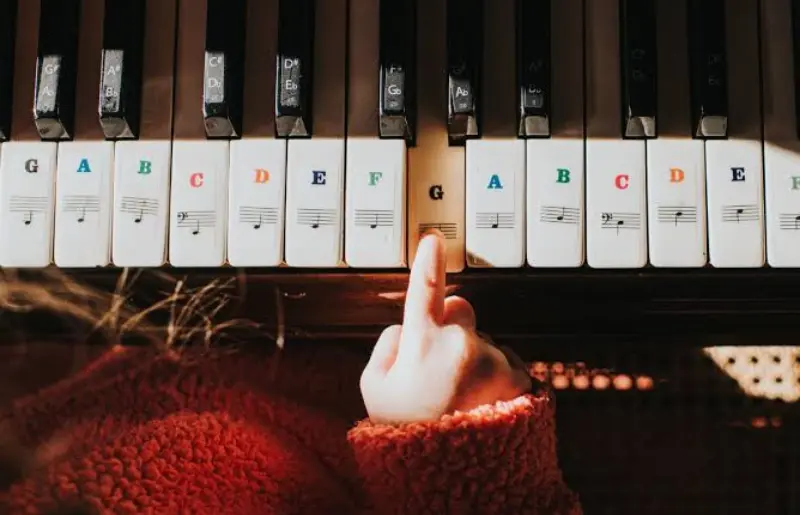
Have you ever sat at a piano and tried to play a melody from memory without sheet music or MIDI, only to keep hitting notes that just don’t sound right? You try different combinations, get close, but something always feels off—like one note doesn’t belong.
That was me as a teenager, trying to figure out Faded by Alan Walker on a keyboard just by ear. Even though the main synth pattern sounds simple, I couldn’t quite find the correct notes at first. Some combinations sounded fine, but others clearly clashed. What I eventually discovered was the key of the song.
So what is a musical key?
Simply put, a musical key is a set of notes that work well together. Each key has a central note called the tonic or root, which acts as the home base of the music.
You can think of it like a colour palette in art. Every painting uses a specific set of colours that naturally work together. Take Starry Night by Van Gogh—it uses a controlled range of blues and yellows to create harmony. If random colours like bright red or pink were added, it would feel out of place and distracting.
Music works in a similar way. A key defines the “palette” of notes a song is built from. Melodies, chords, and harmonies usually stay inside that set. Sometimes composers step outside the key for effect, but those moments stand out precisely because the key is the foundation.
Major vs Minor keys
In Western music, a key is built from 7 notes out of the 12 available semitones. Each key is defined by its root note and the specific pattern of intervals between the notes.
Keys are mainly divided into two types: Major and Minor.
A Major scale follows this pattern:
tone, tone, semitone, tone, tone, tone, semitone
For example, C Major is: C, D, E, F, G, A, B.
A Minor scale follows this pattern:
tone, semitone, tone, tone, semitone, tone, tone
For example, C Minor is: C, D, E♭, F, G, A♭, B♭.
There are 12 major keys and 12 minor keys in total, including sharp and flat variations.
What’s interesting is that some major and minor keys share the exact same notes but start from a different root. A classic example is C Major and A Minor—they both use the same notes but feel completely different because the tonal center changes. These are called relative keys.
Minor keys also have variations. In the natural minor scale, the 7th note sits a whole step below the root, which creates a weaker resolution back home. Raising that 7th note leads to harmonic and melodic minor scales, which strengthen that pull.
Major scales already have a strong resolution built in, so they don’t need this adjustment in the same way.
Why do we use keys?
Choosing a key—major or minor—is one of the most important creative decisions in music.
Just like colour palettes shape the mood of a painting, musical keys shape the emotional tone of a song. Warm colours like red and yellow feel energetic and bright, while cooler tones feel calm or emotional.
Major keys are often associated with happiness, brightness, and clarity. Minor keys tend to feel darker, emotional, or more dramatic. This difference comes from how the notes are arranged, especially the third note in the scale, which is lower in minor keys and creates a more somber sound.
A simple comparison: Here Comes the Sun in A Major feels uplifting and warm, while Für Elise in A Minor feels more emotional and reflective.
Over time, certain keys also became associated with specific moods through classical music traditions:
C Major — simple, pure, childlike
D Major — triumphant, celebratory
E♭ Major — heroic, bold
A Minor — emotional, tender
C Minor — dark, dramatic
D Minor — serious, intense
These are not strict rules, but long-standing musical traditions.
Of course, mood isn’t determined by key alone. Tempo, rhythm, and instrumentation all play a major role. For example, Smells Like Teen Spirit is in F# Minor, but it feels energetic and aggressive, not sad.
Why does key matter in practice?
Keys also determine how well different songs and notes work together. Some keys naturally blend well, while others create tension when combined. This is why harmonic mixing is so important in DJing.
DJs have used key information for decades to create smooth transitions between tracks. Systems like Camelot notation were developed to make this process easier, allowing DJs to quickly identify compatible keys.
Today, tools like Mixed In Key and DJ software such as Rekordbox and Serato automatically detect and display key information alongside BPM, making harmonic mixing much more accessible.
Key detection is also useful for:
- Producers finding matching samples and loops
- Singers checking vocal comfort and range
- Students learning music theory through real songs
If you have a track and want to know its key, you can use a key detector to instantly identify the scale and Camelot code.